Showing posts with label awareness. Show all posts

Friday, December 9, 2011

Drug use at ACC?

Check out this post by Urgent Part 2- Apparently ACC Director Julie Bank has been notified of drug use by her employees (employees who have in the past made life-ending mistakes by putting the wrong dogs to sleep!) and has yet to do anything about it!
Here's to hoping this outrage makes it on the news. The staff at ACC is already bad enough as it is, but for no one to care whether these mistakes happen (because they're all pittie strays anyway, right?), and for no one to seek out to correct these problems, is a real shame. I wonder how they would respond if a purbred dog was put to sleep days after arriving before its owners could find it, rather than just another stray? Every dog at ACC deserves a chance, and these low-life staff members are holding them back from that chance to survive.


Incompetence Running Rampant At NYCACC - PART 4 - Is Drug Use In Shelters Being Ignored?!?

by Urgent PART 2 on Wednesday, December 7, 2011 at 11:41am
Animal Care & Control of NYC is a place where dedicated volunteers and employees are fired for any attempt at all to blow the whistle on widespread negligence and neglect, or even just those that work too hard to get animals rescued.  In the past year alone, employees like Emily Tanen and unpaid volunteers like Rita Bar-Or and Jeff Latzer have been fired for little or no reason at all, with no thought given to the effect their absence would have on the care of shelter animals.

But what about employees who are part of the problem?  Shelter employees that get high at work, or come to work intoxicated while exhibiting disdain for the animals in their care?  Anyone who spends enough time at the shelter becomes very familiar with these people, but what is more shocking is that these people are in fact embraced by the administration.  Why would that be?  Because Julie Bank prizes a very certain quality in the staff she maintains: cold, heartless contempt for any notion of animal welfare.  As long as these people are not sticking their necks out for better care of the animals, all other issues of professionalism, responsibility and dedication do not matter; they will always have a job at ACC if animals matter as little to them as they do to Park Place management.

Urgent has been contacted by numerous rescue groups, adopters, volunteers and even a few staff about the condoned negligence that perpetuates in the mismanaged ACC shelter system.  We were also recently contacted by a concerned citizen of East Harlem who tried to do something about it.  This person (who for obvious reasons insists on anonymity) had inside knowledge of drug use going on at the Manhattan ACC, and even knew who was supplying it to employees. He spoke up about it to shelter administration, and like every volunteer or staff or rescuer who writes emails to shelter management with concerns about shelter animal treatment, he was ignored.  He even tried again, this time including every elected official whose email he could find.


---------- Forwarded message ----------
From: * *
Date: Mon, Jun 27, 2011 at 10:10 PM
Subject: Your last chance before I go on TV about DRUGS AT THE HARLEM SHELTER
To: jbank@nycacc.org, mbloomberg@cityhall.nyc.gov, info@animalalliancenyc.org, info@nycacc.org, rgentles@nycacc.org, sjaneczko@nycacc.org, TFarley@health.nyc.gov, bbdoniger@yahoo.com, KellnerM@assembly.state.ny.us, Patrick.Nolan@us.penguingroup.com, quinn@council.nyc.ny.us, Adrian.Benepe@parks.nyc.gov, commaffairs@nypd.org


Dear Julie Banks,

Why didnt you respond to my email?  It was a very important email about 4 workers at the Harlem shelter who do drugs, and none of you bothered to respond to me.  Do you only respond to white people with lawyers?  You think since I live in the neighborhood where your shelter is that I don't matter as much?

I gave you a list of four people that work in your medical office that use drugs even though theyre supposed to be saving animals. (I copied it at the bottom of this email)  Doesnt that matter to you?  Since I wrote that to you, I read about your shelter on the facebook, and I saw all the shitty things you been doing instead, like killing the wrong dogs and firing your best worker. Why dont you fire the people that are high at work instead?  Two girls on that list I sent you were even talking shit about how proud they was to smoke weed during work!!!  Dont believe me?

If you dont answer this email and drug test these people, i'm gonna get this up on the internet on that Urgent website.  Trust me, you dont want that.  And remember like i said, if you tell them even a half hour before that your gonna test them, theyll pass, and go on being high treating dogs.

This is your last chance julie banks.  Next time you hear from me i'll be on channel 5


---------- Forwarded message ----------
From: * *
Date: Sat, May 7, 2011 at 12:31 PM
Subject: HARLEM ANIMAL SHELTER WORKERS USING DRUGS
To: mbloomberg@cityhall.nyc.gov, info@animalalliancenyc.org, info@nycacc.org, jbank@nycacc.org


Dear Animal Care and Control,
I know for a fact that these four people work in the harlem medical department, and all use drugs all the time.  Sometimes they even use at work. You need to drug-test them right now, because theyre supposed to be helping the animals, and they cant do that if theyre high!  How do I know this?  I know the guy who sells to them.  I promise you, if you give them a drug test like all employees should get, and you dont let them know first, theyll fail. If you tell them even a half hour before, theyll pass (I've done it for jobs before, all you need is a drink from gnc).  But doing that when your supposed to save animals is just wrong.
Trust me, i'm not joking with you.  Don't put the animals at risk any longer!  And if this gets out and people know the vet tex are high, it will look very bad for nyc.
There names are:

xxxxxxxx


And still -- nothing.  The people he implicates are still at the shelter putting animals in danger, including one role of particular importance: a New Hope rescue liaison.  The unanswered emails from the whistleblower also names a shelter behaviorist, a lead vet tech assistant, and a vet assistant. 

The biggest mystery here is why the shelter does not follow through on its pre-existing drug policy of random drug tests, and mandatory testing after a bite incident.  A shelter staff source tells us that the New Hope rescue liaison was bitten last year, but bragged about never being tested or she surely would have failed.  A second source from the shelter staff sent us the attached photo of drug paraphernalia found in the shelter backyard, with a note explaining that it was common sight at ACC.


So Julie Bank, maybe you'll answer Urgent instead: how could you ignore these emails and continue to put the animals' lives in the care of openly irresponsible and "distracted" people?  Numerous staff named in these emails work in the medical department, and the Manhattan shelter is notorious for its rampant medical "mistakes" that leave dogs, cats and kittens found stiff in their cages for lack of care.  The homeless animals of NYC deserve better than this, and the citizens of NYC deserve oversight into who their tax dollars employ.

The NYC Govt needs to know that you are outraged. Please go to this link for contact information:
http://www.urgentdeathrowdogs.org/how-you-can-help/how-togroup1/act.html

Also, The New York State Dept of Health (not the NYC DoH) and the DEA would both be appropriate avenues to explore for complaints due to the involvement of controlled (Scheduled) substances. Those performing euthanasia MUST be registered with the New York State Dept. of Health to handle/administer scheduled drugs (see Section 80.134 of Title 10 regulations).

"The Department of State is committed to maintaining the integrity and competence of the licensees within its jurisdiction. Should a member of the public believe that a licensee has acted in an untrustworthy or incompetent manner, he or she may file a complaint with the Department's Division of Licensing Services. The complaint will be reviewed and an investigation will be commenced to determine whether the licensee should be disciplined. Both the licensee and the complainant are kept apprised of the proceedings.

A licensee who is found to be in violation of the law is subject to reprimand, fine, suspension or revocation."

A copy of the complaint form can be found here:
http://www.dos.ny.gov/licensing/complaint.html


Coming Soon - Part 5 - You won't want to miss it...

Monday, September 12, 2011

Animal Farm Foundation Slideshow

PETsMART offered a phone/web based training on Pit Bull Adoption Basics/Training hosted by Kim Wolf of the Animal Farm Foundation.

These are some of the interesting slides shared with the participants.... These are a great resource if you are trying to explain pit bulls to your friends and family.


Kim said...Only 2-10% of a dog's DNA determines his DNA, and yet we are using that very small amount as a predictor of behavior, which is arbirtary and incorrect.
Don't imply more than you know or use terms incorrectly. Example, for a dog to be a bait dog- there has to be an aggressor dog, which is not a good image to conjure in adopters minds about pit bulls. Also, terriers tend to be "tenacious", but "pit bulls type dogs" can be lazy.

Don't imply more than you know- just because a dog barks at all brown dogs, doesn't mean it cannot be in a home with a brown dog. Fact: It is better to transfer ownership and get the dog back through legal channels if something goes wrong, rather than loaning the dog first- which opens you up to liability as a shelter or organization.

Having a separate area or policy for pit bull dogs sets the potential adopters up to think that pit bulls are different. You as the advocate should not create unnecessary fear. We should not assume anything about a dog's behavior from its arbitrary label.
There can be an unlikely match where you least expect it! Take time to get to know the potential homes.
Animal Farm Foundation does not give people a list of what may go wrong because they feel that they cannot list a comprehensive list of "what ifs".  People with children between 5-17 acquire 75% of dogs at any given time, so age-restrictions automatically restrict the adopter pool to 25%.


Advice from AFF to Shelters/Rescue Groups:

1) Place them next to a variety of dogs, don't segregate.
2) Put a friendly pit bull in your lobby as a greeter with a bandana!
3) Teach the dogs parlour tricks (pray, handshake, roll over, blow kisses)
4) Use enrichment toys to keep pits quieter and busier- they will present better to adopters
5) Think of your adopter as a customer-make the environment calm, cool and peaceful
6) Use playgroups to burn energy, learn more about the dog's personality, and engage volunteers
7) Have Rescue Brunches - invite local rescue groups and foster homes to watch play groups to pick dogs based on observation.
8) Some dogs do best with a job (agilty, disc, obedience, police, search and rescue, assistance, therapy)
9) Happiness Sells, Sadness repells. (Adoptions increase when you focus on the human/canine bond.)
10) Take pictures with other dogs or people, create a scene or tell a story, take pictures in front of landmarks or in costumes, even a hand or foot of a person in a picture increases the dog's chances of getting adopted. Take videos!
11) Use adopt me vests
12) Use business Cards
13) Don't forget the bling! (Cute tags, collars, bandanas!)
14) Don't forget the Elder dogs, they can be great additions to homes for years to come
15) Promote your staff that live with pit bulls to show you believe what you are selling
16) Promote your shelter as an "adoption option" rather than individual dogs.


Friday, September 2, 2011

Reader Mail!

This is my very first issue of Reader Mail- If there is a particular question you have about pit bulls, please drop me a line at passion4pits@gmail.com, I'd be more than happy to answer any and all questions!

This first one comes from Haney. She writes that she has one pit bull and is considering adding another to their family. She says that she has heard that pit bulls-even in the same family-should not be left alone at home together and asked my opinion on this and whether or not it is necessary to crate them while away....

                                                                                     Thanks for writing in, Haney:
We have a male and a female as you may already know- which I believe to be the best combination- that's not to say that it cannot work between to females or two males, but it is much harder.

We read a lot about multi-dog homes before we made any decisions on how/where to keep them while we are away. This is a great resource by the way--Pit Bull Rescue Central and other sites will tell you that they absolutely should not be kept alone together.  


They write, "Never Leave Your Dog Unsupervised With Other Animals
We can't emphasize this enough. If no one is around to keep an eye on them, dogs should be safely crated or in separate rooms, even if they are best friends. Dogs can fight for many reasons—status, food, toys, or rawhides—and if you’re not there to manage them, things could escalate. Your dog does not need “company” when home alone, and the routine of going into a crate every time you leave can be quite comforting for your dog. It also provides you with total piece of mind. There is no chance that your dogs will fight, and they won’t chew up your favorite pair of shoes! "


For these reasons, we do keep our dogs separated during the day. I Winnie and Bruno get along fantastically, and have only had a couple spats in the year they have been together-- the longer dogs have been together, the more they work out their status in the family structure and their relationship, so that the possibility of fights breaking out among two dogs that know eachother very well is very low, but not impossible.


While we feel that Bruno and Winnie have an almost 0% chance of having a bad fight, we do know that they are rough with eachother. When playing (even supervised) they come away with small bloody scratches around the ears and knees. This of course is not because they want to hurt eachother- but because pit bulls play more roughly with each other than other dogs do. However, they are capable of inflicting much more damage on each other than other breeds of dogs. Once you have had your dogs for a long time, you probably will be able to pick up easily on their body language to know whether or not they are feeling playful, social, uncomfortable, iritable etc- but as long as both of your dogs are somewhat social- they will transmit these clues to one another as well, and you shouldn't have any problems. (I suggest reading Inside of a Dog by Alexandra Horowitz to learn more about dog interactions.)

On the issue of crating-I do not think it is the best solution, although we have a crate and bring it with us on trips because Bruno loves it. We crated Bruno for some time because we felt that he liked it there and felt safe (he would go there with the door open when we were home anyway) and because he would have accidents and chew up things in the house if we gave him any more room (such as a whole box of oreos the other day!).


Recently, we came up with a good solution, although your specific solution will depend on how many rooms are in your home and its layout. We keep Winnie in the bedroom with the door closed. She is trustworthy around leather, shoes, and personal items, so she is well-behaved there and doesn't need to be crated. Bruno, on the other hand, is a more difficult problem. We tried different solutions and he was able to escape places we put him and reeked havoc in the rest of the house. Finally, we found very sturdy baby gates at Target for less than $50 a piece and blocked off the Kitchen for him. He seems to like it there and cannot knock the gates over as he had done to previous gates because they are actually screwed into the wall. He also cannot destroy anything because we keep the counters clear, and if he has an accident, at least it is not on the carpet and it is easy to clean up when we get home. I suggest trying this in your kitchen before crating and only use crating as a last resort as it can drive some dogs crazy if left for too long. If it is possible not to keep the dogs on either side of a gate- that is also preferable so that they don't feel the desire to jump the gate to get to each other.

Again, I would recommend always having the dogs together when you are home so that they can develop their relationship- and leaving them together for short periods of time once you are sure they are compatible, but for long periods away- keeping them in separate rooms has been a good solution for us.

I'm so glad to hear that you are considering a second dog! I hope that the process of adding to your family is as wonderful as ours was and that your pitties become best friends!

Best of luck!!

Thanks for reading and for giving your time to animals in need,

Jessica

Moral Inconsistencies about Animals

Moral Inconsistencies...
That is what I want to write about today.

Why is it that we eat cows, poison rats and let dogs sleep in our beds? Why do we care when a dog is humanely euthanized but not when a pig is slaughtered for food or a seal is clubbed for its fur? Why do we hate Michael Vick for abusing dogs when we sit on, carry around, and wear leather goods?

For some of you, it might be easy to answer these questions by simply saying, "Well, pets are different." But why? Why are we plagued with these moral inconsistencies? Why was Hitler a vegetarian, yet order the killing of millions of jews? Why do some Brazilian tribes both kill adult monkeys and personally breast feed their young monkey babies?  This is the subject of Hal Herzog's book "Some we love, Some we hate, Some we eat."

When we first brought Winnie home, it took me all of two months before I stopped eating mammal flesh. I had always had an aversion to handling animal flesh before it was magically converted into "food" via heat, but I wasn't convinced it was morally wrong until a strange thing happened.

http://zivevum.webatu.com/catfish-sahara-wastewater.html
While I was on vacation in the thousand islands a year ago, I witnessed a blue heron fish out a cat-fish from a shallow area and leave it hidden in some dry leaves and grass to suffocate. After it died, it came back and taken it away to eat, presumably to help feed itself and its young as many birds do, I noticed that near the catfish's shallow pool were baby catfish. I had been told that fish of course take very little responsibility for their young, although there is evidence that some fish and amphibians have evolved to do so. For example, the male seahorse holds eggs in his pouch until they hatch and some male frogs actually hold tadpols in their mouths until they are ready to leave. (Listen to this podcast to learn more about how various animals care for their young.)

This did not disturb me much. The young catfish would not be raised by their parents like a fox pup is raised by its mom and dad, but I took particular offense to the way the heron let the catfish die. To be honest, I anthopocentrized the catfish and imagined the agony it felt out of the water- something many children do when they experience fishing with their Dads for the first time- imploring them to throw the fish right back and feeling the guilt associated with yanking these animals in and out of the water for our pleasure.

I was told to forget the fish, that it was part of the nature, and that I truthfully would not want the heron to die of starvation. Of course, I felt that I needed to hold myself to a higher level. My closeness with my dog- the first animal I was ever completely responsible for- led me to feel a closeness intrinsically with other mammals like us.
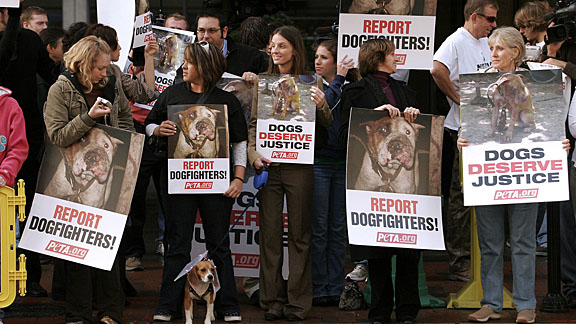
www.peta.org

How should I proceed with this moral quandary? Well, I stopped eating mammals, and am happy to say that in 1 full year I haven't eaten any mammal flesh. I do, however, still eat fish and poultry. My reasoning for this first began with my both practical concerns and my emotional feelings-- I don't really feel so close to a chicken or a fish and I don't necessary believe that my consumption of them is morally wrong.

At first, free-range poultry and wild-caught fish seemed logical, although there is some evidence that chickens actually prefer to be clusterred together- and given the chance to run free- will huddle under each others wings. (Read about other problems associated with anthropocentrizing animals in A. Horowitz's book, Inside of a Dog.) Recently, after much thought, I found a better justification for my eating habits. If forced to live in the woods for years- or on a deserted island, I would forage and eat fruits, nuts, vegetables and whatever else I could find, but I would also be comfortable collecting insects, spearing fish and catching them with my own hands, or if need be- breaking a bird's neck so that I could eat it.

On the other hand, I would be completely unable to trap and eat any mammal of any kind, not under any circumstances. Whatever genetic code brought me to adore my dogs, whether it be due to my affinity for baby-like creatures to secure the future of my own children- or my ability to sympathize with mammals in order to better hunt them (called theory of mind by philosophers and psychologists), something went wrong somewhere- and I could no longer be able to personally kill a mammal or cut up its flesh. Hence, no mammal meat, and if I can avoid it, no leather.

Nor would I be able to hurt any creature (mammal or not) intentionally and without good reason. In ESPN's recent Michael Vick special issue, author David Fleming raises these exact inconsistencies in the moral behaviors of Vick haters.

Jay Paul/ Getty Images/ESPN.go.com

He writes,  
"From factory farming to horse racing, a multibillion dollar sport where two-thirds of all washed-up thoroughbreds are either abandoned or slaughtered, our perspective regarding animal cruelty is significantly altered depending on the degree of intimacy involved. We don't have to witness the stomach-turning horrors inside a farm factory in order to get chicken nuggets for lunch. They're handed to us through a drive-through window, wrapped inside a clean, colorful package. Theoretically, our hands remain clean, whereas an exhaustive report by the Department of Agriculture revealed that Vick drowned, electrocuted and hung dogs with his bare hands. "The American population may not be guilty of carrying it out with their own hands as Vick did," says Singer. "But it's certainly guilty of supporting animal cruelty through their purchases. It's not any worse to make a dog suffer than to make a pig or a chicken or a cow suffer. If you look at factory farms and if you support them, you can't say 'Vick made animals suffer and I don't.'"

As a dog lover, and a pit bull lover, I found that I was unable to place pits above other dogs, dogs above other mammals, and my own desire for tasty bacon over the pain and suffering of pigs etc. I urge you to think about these issues- about the possible presence of inconsistencies in your own moral code. While euthanasia of dogs in major cities in the U.S. is a huge problem, and a problem that outrages us because of our feelings that dogs are like people- less kind killing of other animals happens every day, on a massive scale, for our indulgences. It is worth ruminating on, isn't it?

Tuesday, August 2, 2011

Shelter Dog Photographer's Blog

This blog entry by prominent photographer Traer Scott really touched me, and I decided to share it with you all.

Parvo and kennel cough are horrible illnesses that live in unhealthy conditions of packed and poorly-managed shelters and can sweep through shelters quickly - learn more about parvo in shelters here.

Death on Our Shoes

Sasha"It is no secret that the dogs who end up in shelters are the unlucky ones. These are not the dogs that get to nose open Christmas stockings, or who trot down the street with designer collars. They are not the dogs who sleep under the crisp bed covers at night or ride gleefully with their heads hanging out the windows of cars. More times that not, these are the dogs  who are viewed as being expendable by their owners. They are the ones who get loose or get dumped and no one comes to look for them. Many shelter dogs have rarely seen the vet...or been given a simple $20 vaccination that protects them against Parvo. Their bad luck however,  is the only way in which these dogs are inferior. They are just as smart, just as loving and just as beautiful as any other dog. Sometimes, more so.

Last week, a quiet, faceless enemy swept through the shelter where I volunteer. This time the antagonist wasn't time, but a faint trace of bright red blood in the dogs' stools which became proof positive of Parvovirus. So far, the outbreak has left a body count of 21, all Pit Bulls.

Every single dog that I nurtured, named, photographed, wrote Petfinder bios for, played with and taught skills to, is now dead. The staff who fed, watered and cared for  these dogs all day, every day now goes to work in a quarantined facility that is oddly quiet yet full of ghosts.

There are so many things that make this devastating, not the least of which is the fact that at least 3 of these dogs had been at the shelter for almost 4 months, while myself and the staff tried desperately every week to place them. The trio survived several culls for space, almost constant confinement, a severe lack of mental stimulation and a level of stress that most human beings can not even fathom. They triumphed over all of this- just to be taken out by a virus that spread silently from one infected carrier...a virus that is almost 100% preventable.

When I first heard that the shelter was closed due to Parvo, my heart fell into my stomach, but I had no idea how widespread the infection would be. The next day, I received a list with ten or more infected dogs on it, the following day, another 6. One by one, all of these lives which we fought so hard to save, were extinguished.  All of this from a virus that hung in the air, clinging to our shoes and our hands, spreading evasively since late June.

I am so saddened and angry at this needless loss of life. Angry because these dogs didn't deserve to be there in the first place and even angrier because if any one of them had been current on their shots, they would still be alive.
Over the past 15,000 years, we have succeeded in domesticating and thouroughly dominating a species that now is completely dependent upon us to survive. The gray wolf, which the dog was once domesticated from, hunts for it's food, breeds autonomously, possesses natural immunities to disease and lives a life completely free of and in fact,  antithetical to, human existence. Dogs on the other hand, have been bred for millenia to serve humans: as companions, workers and protectors. They are utterly subservient to our treatment and rely entirely on us for food, shelter, affection, amusement and good health.

All they really require is the most minimal of care and compassion and we continue to fail them.
We allow them to breed rampantly and then kill 4 million every year in shelters because there isn't enough space; we make them into designer breeds like Labradoodles and Cockapoos because it's a charming mix while 30% of the homeless dogs in shelters are pure breds; we abuse them, neglect them and even fight them until the death.
Don't we owe these ancient companions more respect? We show more reverence and good will to the very least and most despicable of our own species while constantly using and abusing the faithful creatures that have been at our side for centuries.

I write this in memory of Sasha (pictured), Huckleberry, Bandy, Tiger, Summer, Damon and all of the dogs who were needlessly lost last week due to public enemy #1, ignorance."

Monday, July 11, 2011

The History of the Pit Bull

Enjoy this Dog Files Documentary on the Pit Bull...
Share it with your friends, your families, your co-workers.

Friday, July 1, 2011

Prepare your dogs for July Fourth.

The Fourth of July may be an exciting holiday for humans, but our canine counterparts dread the flashing lights and banging noises that they can never understand.

Because dogs can hear at a range of  40 Hz to 60,000 Hz (while humans can only hear 12 Hz to 20,000 Hz, the noises of fireworks and thunder are very terrifying for them.

These frightening sights and sounds drive many dogs from their homes or owners in search of a safe place to hide. When they eventually end up at the local shelter, they displace many dogs that are already there.

In 2009, Salt Lake County Animal Services- 
which usually takes in 5 dogs a day- took in 73 dogs in the days after July 4th.
                                                                                                           
Sometimes the consequences can be worse than a night's stay at the shelter. A few years ago, my boyfriend and I were in the Thousand Islands for July Fourth when a family member's elderly Wheaten terrier named Caramel was let out at dusk to do her business. When no one could find her a little later, no one was concerned because the house we were at was surrounded by water and Caramel wasn't very mobile at this point in her life. Blind and somewhat deaf, she usually bumped into things and stood in corners for long periods of time because they were safer.
Later that night, after the fireworks, we feared that she had gotten lost in the woods nearby and went searching with flashlights. Unable to find her we waited till sunlight.
The next morning, family members circled the islands in boats and climbed through the woods. Finally, a neighbor on a neighboring island said she heard barking. We ran to the reeds where the water met a portion of the wooded island and found her in the water, clinging to some brush. She had yelped not 15 minutes earlier so we jumped in, pulled her out and carried her back to the house where we laid her out in the sun.
Somehow, despite her arthritis and age, she was able to swim to a safe spot and tread water all night, only to die when we got to her. She was bleeding from her nose from exerting so much effort, so we knew she had just recently passed. It was an extremely difficult sight to witness for Caramel's family- whose children had grown up with her.

Later that day we buried her among the wild lilacs, knowing that her time was coming soon but sad that she passed with such stress and anxiety. Other stories include a dog who had a siezure and died during the fireworks, and another who tore up the whole house in panic-causing himself to bleed. (Read here.)


To prevent these kinds of tragedies and the unfortunate influx of family pets to already crowded shelters- please keep your dog somewhere safe and quiet on Monday night.

First of all- do NOT take your pet to the fire works display. It is NOT fun for him or her- trust me, your pet wants to be at home, in the dark- in their crate or under a blanket. My parents' Wheaten terrier even tries to climb into the refrigerator to hide when fireworks or storms are rumbling outside.

DO NOT leave them outside, especially without identification.

DO NOT wait to go to the shelter if your dog is lost. With the large influx of animals, some shelters may not wait as long as it takes you to find your family member.

For more tips on keeping your dog safe, click here.
Thanks for reading---Good luck and enjoy the holiday weekend!
Winnie loves the water- this seems like a pretty safe depth to me!

Thursday, June 23, 2011

Pettie Awards-Vote for a Great Cause!

As pet & rescue bloggers, we don't do what we do for recognition- but we do it to reach as many people as possible about our cause. In order to reach more people- I've redesigned my blog and integrated with facebook to try to get the word out even more about

a) what great pets pit bulls can be,
b) how many pit bulls are suffering in shelters and living with cruel owners, and
c) how unfair this disparity is.


I try to show this though my city's mismanagement of the public shelter system as well as through my fun and sometimes difficult times with my two rescued Pit bulls, Winnie & Bruno. Animal cruelty and abuse, especially at the hands of a shelter really upsets me- but the more people who know about it- the closer we get to seeing it end.


I'm excited about a competition I heard about called the Pettie Awards, hosted by Dogtime.com. It is such an amazing competition because the winners actually get to donate $1,000 to the shelter of their choice while increasing awareness for many positive causes. No matter who wins, the animals win.

So go ahead and vote!!! It is such a great cause and will result in $8,000 total going to various shelters.

Read about last year's winners here.

Monday, June 6, 2011

San Francisco

This past week I took a 3-day trip with my friends to San Francisco. I had never been to the West Coast at all and enjoyed seeing the Pacific for the first time, biking the Golden Gate Bridge, and eating amazing food.


Of course I visited what I consider to be the dogs of the sea-- Sea Lions! They are super social creatures, who love lazing around all day, barking at each other and growling when their sunny sleeps get interrupted.


As I am an obsessive dog-watcher, I looked out for dogs everywhere we went. I loved watching the dogs romp on the beach and play off-leash at Alamo Square. We came across this lovely girl, Luna- who hammed-it-up on the grass by rolling onto my feet and gently nipping at me to get more affection-- Look at that smile!


We also met bunches of other Golden Retrievers, Labs, French Bulldogs, Collies and other great dogs- Unfortunately, I was sad to find that there weren't many mixed breed dogs or pit mixes around. I figured that this meant that there are fewer unwanted/unplanned litters in SF and therefore, fewer shelter dogs. In New York, pit bulls are everywhere- when I stepped out of the path station I was excited to see not only more dogs, but more mutts and more pitties- I guess I am a little biased against pure-breed dogs because I figure they need less help in this world.

I did run into one Pit bull while in San Fran and happily sat down with his owner, a homeless ex-U.S. marine.


San Fran has a surprisingly large homeless population- I've been told because of the nice weather and friendly people. When I met this man and sat next to him- his dog (Tyrell), instantly climbed out of his owner's lap and gave me plenty of kisses. He laid down (belly-up) next to me on the side-walk and enjoyed getting his belly scratched.

Tyrell's owner told me that he gets all the vet care he needs because in SF, it is illegal to turn away an animal in need, just as it is illegal to turn away a person who needs emergency care. This makes it financially possible not only for Tyrell to have a "home" of sorts, but also for his owner to have companionship. He told me that Tyrell is his best friend in the whole world, and inspired him to get off the streets and to buy a van for them to sleep in. Together, they share a sleeping bag. Tyrell even protects his owner at night and has bitten another homeless man who tried to steal their things. It seems like a wild life, but the more I heard about this duo- the more sure I became that they really needed each other- and that neither of them would get by without the other.

Fortunately, due to a law that forces pit bulls to be neutered- Tyrell was neutered at the age of only 2 months to prevent over-population and he cannot contribute to more homeless pets, although the law apparently does not apply to other breeds of dogs. I gave his owner $20 for dog food and wished them luck and was so happy I saw a pit bull before leaving San Fran.

Does anyone know more about the shelter system there and why pit bulls must be neutered so young?

Wednesday, April 6, 2011

PetItForward.org & Affordable Pet-Ownership

Since adopting Winnie and Bruno at the ages of 23, Chip and I realized how expensive dogs can be. Together, we make a decent income - not above average by any means - we are both paralegals at reputable law firms in New York City- but lately it feels like you need to be rich to own a dog here and keep it healthy.

So many of the dogs that come into the shelters in NYC are mal-nourished, injured or geriatric and need vet care their families cannot afford. Here are number of dogs I've seen in the last few months. Each one was either starved, had mange, or had a condition that needed expensive care. The expenses needed to rescue these dogs make it impossible for anyone other than Rescue Groups to adopt them:


(luckily-each of thses dogs was rescued by a rescue group- you can find out more about each in the safe folders at Urgent Part 2, but many are not so lucky.)


The story of Patrick(the pit puppy starved and thrown away as garbage) is of course a horrible one of cruelty and neglect, but it has shed light on the fact that many pet owners cannot afford care- and many cannot even afford adequate food. Please don't get me wrong- I hate people who don't take care of their dogs- I will do anything to make sure my dogs are fed and healthy and happy- and let's face it, people in this city adopt dogs they cannnot afford and that is wrong, but I do feel that something can and should be done it make it more affordable to own a dog.

That is where Pet It Forward comes in. It's CEO, Jenna Dreher, really believes in the mission of lowering the costs of pet-care- so much so that she donated generously to Winnie's ACL-repair surgery.

Jenna writes, "Pet care can be expensive and it doesn't have to be. Pet It Forward is like priceline.com for pet care, freer and more fun. We put the power in the hands of pet owners, giving them the ability to network online with those in their community, such as other pet owners and care professionals, to find more affordable or even free care for their pets."


I am really excited about this site; it connects pet owners with other pet owners in their nieghborhoods, makes booking and paying for pet-care online quick and easy, and can save us up to 50-100% on pet care. When you sign up for an appointment, the providers are sent the scheduling details, you are sent a reminder, and you can even review the provider- this means gaining insight from your neighbors about the vets, groomers or the dog-walkers in your area. It also puts you in touch with other dog owners so you can even set up "dates" for your pet.

The potential for this site is huge- if this site can generate enough users and pet care providers- it could save lives at city shelters by keeping dogs out of shelters in the first place. It would also open up homes for dogs with people who think owning a dog would be prohibitively expensive- like young, busy people who need to use dog walkers and expensive boarding facilities. The cheaper pets cost to own, feed and care-for, the more pets can be rescued and live fufilling lives.

The site is still in development, and accessibility to low cost vet-care is not yet available, but users will be able to save on boarding, walking, feeding, and cleaning service costs.

Please consider signing up-you will get an email when it is fully-functional.

To sign-up for an invitation to join Pet It Forward, click here.


Thursday, October 28, 2010

Good Resources for Pit-Lovers!


Pit Bull Rescue Central - An amazing resource for more information

American Humane Association - Myths and Facts about APBT

Understand-A-Bull - A good website to learn about BSL (Breed Specific Legislation)

Pit Bull Awareness Day - October 23

Find a Pit-Bull near you that needs a Home!

The Vick Dogs - Jim Gorant's Book about what happened to the tortured Vick dogs
Related Posts Plugin for WordPress, Blogger...