
Follow me and my two rescued Pitbulls, Bruno and Winnie on our adventure as I volunteer, learn more about Pit bulls, help to educate others about this amazing breed while following the practices of Animal Care and Control of NYC.
Showing posts with label shelter. Show all posts
Showing posts with label shelter. Show all posts
Wednesday, November 23, 2011
Help for the Holidays
All it takes is one person, one dollar, one minute to save one dog- if we work together to support rescues.
Please keep rescue groups in your heart these holidays.
See what good can come of your small efforts:

Friday, July 29, 2011
Rescue Spotlight: Ramopo-Bergan Animal Refuge
 When you walk into the adoption floor at Ramopo-Bergen Animal Refuge you hear a strange sound...
The sound of complete silence. I was baffled and asked myself, "Where are all of the dogs?" No large pit bulls were leaping to greet me, no scared dogs were curled up in balls on dirty blankets in the corners, no dogs made any sounds at all!
As I continued walking in, I saw that the dogs were not actually missing- but laying peacefully on beds or in crates, enjoying the lazy afternoon warmth streaming through the windows. (Yes, this shelter has actual windows, not to be found in even the best city shelters.) Noticing me approach, they each calmly came to sniff my hand and wag their tails. Later on, barking only seemed to accompany the daily feeding time.
 Ramopo-Bergen Animal Refuge is a no-kill shelter in Oakland, New Jersey that saves and re-homes up to 1,000 dogs a year. Like most privately-run shelters, they take in plenty of pure-bred dogs and puppies because these are in the highest demand and fetch larger sums which keep the shelter running- but they still make space to save some pit bulls from euthanasia shelters and even are dedicated to taking in all the pit bull puppies they can. This is a wonderful policy because it opens more homes to pit bulls that might not have otherwise considered them.
By contrast, because NYC-Animal Care and Control is filled with pit-bulls and geriatric dogs- many people do not even visit. (More adoptable dogs are quickly rescued and saved from inevitably catching kennel cough.) Due to the variety, desireability and healthy condition of the dogs at good shelters like RBARI and Animal Haven, pit bulls at these locations are viewed by more potential adopters and may have a better chance at finding a good home.
The facilities at RBARI were clean, quiet and well-staffed with dozens of volunteers-including many high-school students receiving volunteer credit. The animals at this shelter are extremely lucky and well cared for. Just look at the clean spacious corrals filled with blankets, toys, and large clean bowls of water! If only every shelter was this well-run.

I came upon this adorable little pocket-pittie named Petunia. She came from a kill-shelter when she was a tiny baby and has been waiting 2 months so far for her forever home. She is a little older than 8 weeks old and is good with other dogs and children.

I enjoyed playing with her a bit outside. She has plenty of energy and will need proper socialization, exercise and training, but is so completely adorable- how could anyone pass her up!?

Don't let her long wait worry you though- every pit bull at RBARI is given the time, resources and dedication necessary to find a proper placement.

Beautiful Nessie has been at RBARI for a year, but gets plenty of walks and stimulation. She is trained well and everyone who walks her maintains her training so that she knows to sit whenever exiting a door.

Nessie is a sweetheart with a big heart and a waggely tail. During my visit with her she loved being out-doors and smelling the flowers and approached strangers with friendliness and a wagging tail. She is not great with other dogs but focuses her attention well on humans and is extremely trainable.

Another Pittie at RBARI was able to find her first home when she was a puppy but was brought back after a conflict with the other dog of the house.

Because RBARI was unable to find her a home, they have placed her with a pit-specific rescue where she has a better chance of getting the training, exercise and potential adopters she needs.
This is what Tootsie looked like as a pup and now.

RBARI also recently found a home for this special pit-bull named Hooper.
Hooper was rescued the day before his impending-euthanization from a kill-shelter.
He was a stray with an extremely mal-formed paw. Despite this- the people-loving pit found a good home very quickly who brought him to an Orthopedic specialist who is now dedicated to getting Hooper surgery to fix his paw.
RBARI is raising funds to help Hooper- if you would like to help, you can call (201) 337-5180 or e-mail adoptlove@rbari.org.
To see all of the happy, healthy, wonderful dogs (including small breeds and puppies) check out petfinder.
RBAR's website also suggests you visit these great pit bull resources:
Bad-Rap, PBRC, and SPBR.
Monday, June 6, 2011
San Francisco
This past week I took a 3-day trip with my friends to San Francisco. I had never been to the West Coast at all and enjoyed seeing the Pacific for the first time, biking the Golden Gate Bridge, and eating amazing food.

Of course I visited what I consider to be the dogs of the sea-- Sea Lions! They are super social creatures, who love lazing around all day, barking at each other and growling when their sunny sleeps get interrupted.

As I am an obsessive dog-watcher, I looked out for dogs everywhere we went. I loved watching the dogs romp on the beach and play off-leash at Alamo Square. We came across this lovely girl, Luna- who hammed-it-up on the grass by rolling onto my feet and gently nipping at me to get more affection-- Look at that smile!

We also met bunches of other Golden Retrievers, Labs, French Bulldogs, Collies and other great dogs- Unfortunately, I was sad to find that there weren't many mixed breed dogs or pit mixes around. I figured that this meant that there are fewer unwanted/unplanned litters in SF and therefore, fewer shelter dogs. In New York, pit bulls are everywhere- when I stepped out of the path station I was excited to see not only more dogs, but more mutts and more pitties- I guess I am a little biased against pure-breed dogs because I figure they need less help in this world.
I did run into one Pit bull while in San Fran and happily sat down with his owner, a homeless ex-U.S. marine.


Of course I visited what I consider to be the dogs of the sea-- Sea Lions! They are super social creatures, who love lazing around all day, barking at each other and growling when their sunny sleeps get interrupted.

As I am an obsessive dog-watcher, I looked out for dogs everywhere we went. I loved watching the dogs romp on the beach and play off-leash at Alamo Square. We came across this lovely girl, Luna- who hammed-it-up on the grass by rolling onto my feet and gently nipping at me to get more affection-- Look at that smile!

We also met bunches of other Golden Retrievers, Labs, French Bulldogs, Collies and other great dogs- Unfortunately, I was sad to find that there weren't many mixed breed dogs or pit mixes around. I figured that this meant that there are fewer unwanted/unplanned litters in SF and therefore, fewer shelter dogs. In New York, pit bulls are everywhere- when I stepped out of the path station I was excited to see not only more dogs, but more mutts and more pitties- I guess I am a little biased against pure-breed dogs because I figure they need less help in this world.
I did run into one Pit bull while in San Fran and happily sat down with his owner, a homeless ex-U.S. marine.

San Fran has a surprisingly large homeless population- I've been told because of the nice weather and friendly people. When I met this man and sat next to him- his dog (Tyrell), instantly climbed out of his owner's lap and gave me plenty of kisses. He laid down (belly-up) next to me on the side-walk and enjoyed getting his belly scratched.
Tyrell's owner told me that he gets all the vet care he needs because in SF, it is illegal to turn away an animal in need, just as it is illegal to turn away a person who needs emergency care. This makes it financially possible not only for Tyrell to have a "home" of sorts, but also for his owner to have companionship. He told me that Tyrell is his best friend in the whole world, and inspired him to get off the streets and to buy a van for them to sleep in. Together, they share a sleeping bag. Tyrell even protects his owner at night and has bitten another homeless man who tried to steal their things. It seems like a wild life, but the more I heard about this duo- the more sure I became that they really needed each other- and that neither of them would get by without the other.
Fortunately, due to a law that forces pit bulls to be neutered- Tyrell was neutered at the age of only 2 months to prevent over-population and he cannot contribute to more homeless pets, although the law apparently does not apply to other breeds of dogs. I gave his owner $20 for dog food and wished them luck and was so happy I saw a pit bull before leaving San Fran.
Does anyone know more about the shelter system there and why pit bulls must be neutered so young?
Monday, May 16, 2011
Pit Bulls + Science
Amazingly, it takes many many generations of selectively breeding dogs to get a certain feature, attribute or skill, but those "chosen" genes may not be the most successful genes. A pure-bred dog's apprearance can be based on mostly recessive traits, such that they are easily "bred-out."
In other words- if you select and restrict a pool of dogs- they will eventually appear exactly the same over time. However, if you mix dogs all over the globe for generations and generations and introduce no selective breeding--they will tend to look similar and possess all dominant genes. (This is similar to the way blond hair and blue eyes in humans are said to be dying out because it is recessive.)
The DNA that allows dogs to be the most diverse species on the earth is unique to dogs, wolves and foxes. If you tried to breed a cow with short legs, or a bear with a curly tail- you would try and try and never achieve it. Dogs on the other hand have more genetic diversity even though they have 99.8% similar DNA - the difference between a 10 inch tall chihuahua and a 42 inch tall Great Dane is found only in 0.2%.
 The reason is, dogs have long sections of DNA called 'Tandem repeats" that are extra unnecessary copies of genes and they are also very prone to mutation- allowing breeds to be developed in a relatively very short period of time. (Read more here.)
In 1965 Genetics study by Scott & Fuller showed that when you breed two pure-bred parents-the resulting generations of dogs are increasingly diverse and look very little like each other or the original breeds.
For example, this Cocker Spaniel and Basenji had puppies that looked like neither of them:


Often times, shelters have no clue what to label a dog because even its litter-mates and parents could share few physical characteristics. According to Wisdom Panel, which is used to test DNA- if a dog has been mixed for three generations- there is no way to genetically determine the breeds in its ancestry. This is because breed markers (often recessive) are the first to go when breeds are mixed.
Pit bulls are the most diverse group of dogs- as they are not even a breed to begin with. It is possible that well-mixed populations of dogs tend to look like "pit bull type dogs." If you let dogs breed however they wanted for 3+ generations, what features would fade away? It is likely that extreme features/overly-shortened or elongated features would fade (very long or short coats, ears, legs, muzzles, tails and weight.)
DNA tests of mutts can reveal interesting trends (read more here). Most likely because the number one place owners get their mutts is the shelter (46%), 9/10 mutts in the U.S.A. are spayed or neutered. This means that mixed genes are less likely than pure-bred genes to be passed on- preventing a real melting-pot of doggy-DNA from developing. Pure-bred dogs are less likely to be neutered. This is why mutt-DNA shows the popular breeds of the previous decades showing up in today's mutts rather than today's popular breeds. (For example, the Chow-Chow is the 63rd most popular breed by the 3rd most likely breed to show up in mutts because they were popular purebreds in the 1980s.)
However, because there is no real pit bull breed-the genetic pool is already diverse and getting more and more diverse with time. Our dog Bruno looks like a standard pit bull- but has no "Staffordshire" DNA (only dalmatian and poodle). On the other hand- our dog Winnie looks less like a standard pit bull, and has at least 25% Staffie DNA.
Because of this diverse genetic pool- it is hard to argue that all of these dogs have any commonalities at all- other than they are well-mixed and probably lack genetic diseases.This is important for potential-adopters to know, because labels can turn them off to great dogs. A research project done at Western University in Pomona showed that in 15 out of the 16 dogs, breeds were shown to be predominant that the shelters did not recognize, and that only 25% of the dogs identified as specified breed mixes were found correct by DNA. This is surprising because the dogs used in the study could have been better identified, even by appearance if the shelter staff had done a little more research or took a little more time-rather than simply labeling dogs "lab", "terrier" or "shepherd" mixes.

Labeling the dogs correctly could help them get adopted and lessen the stigma of the "pit bull." DNA tests are too difficult, and mixed dogs are too well-mixed to often even look like the breeds they come from. I think it may be best to simply call these shelter dogs "Mixed Breed" or "Multi-Breed" dogs, and leave it to the adopters to determine for themselves if they like what they see. Maybe labeling breeds does more harm than good.
In other words- if you select and restrict a pool of dogs- they will eventually appear exactly the same over time. However, if you mix dogs all over the globe for generations and generations and introduce no selective breeding--they will tend to look similar and possess all dominant genes. (This is similar to the way blond hair and blue eyes in humans are said to be dying out because it is recessive.)
The DNA that allows dogs to be the most diverse species on the earth is unique to dogs, wolves and foxes. If you tried to breed a cow with short legs, or a bear with a curly tail- you would try and try and never achieve it. Dogs on the other hand have more genetic diversity even though they have 99.8% similar DNA - the difference between a 10 inch tall chihuahua and a 42 inch tall Great Dane is found only in 0.2%.
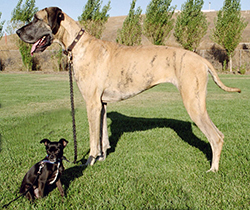
In 1965 Genetics study by Scott & Fuller showed that when you breed two pure-bred parents-the resulting generations of dogs are increasingly diverse and look very little like each other or the original breeds.
For example, this Cocker Spaniel and Basenji had puppies that looked like neither of them:


Another generation later- even more variety was present:

Pit bulls are the most diverse group of dogs- as they are not even a breed to begin with. It is possible that well-mixed populations of dogs tend to look like "pit bull type dogs." If you let dogs breed however they wanted for 3+ generations, what features would fade away? It is likely that extreme features/overly-shortened or elongated features would fade (very long or short coats, ears, legs, muzzles, tails and weight.)
DNA tests of mutts can reveal interesting trends (read more here). Most likely because the number one place owners get their mutts is the shelter (46%), 9/10 mutts in the U.S.A. are spayed or neutered. This means that mixed genes are less likely than pure-bred genes to be passed on- preventing a real melting-pot of doggy-DNA from developing. Pure-bred dogs are less likely to be neutered. This is why mutt-DNA shows the popular breeds of the previous decades showing up in today's mutts rather than today's popular breeds. (For example, the Chow-Chow is the 63rd most popular breed by the 3rd most likely breed to show up in mutts because they were popular purebreds in the 1980s.)
However, because there is no real pit bull breed-the genetic pool is already diverse and getting more and more diverse with time. Our dog Bruno looks like a standard pit bull- but has no "Staffordshire" DNA (only dalmatian and poodle). On the other hand- our dog Winnie looks less like a standard pit bull, and has at least 25% Staffie DNA.
Because of this diverse genetic pool- it is hard to argue that all of these dogs have any commonalities at all- other than they are well-mixed and probably lack genetic diseases.This is important for potential-adopters to know, because labels can turn them off to great dogs. A research project done at Western University in Pomona showed that in 15 out of the 16 dogs, breeds were shown to be predominant that the shelters did not recognize, and that only 25% of the dogs identified as specified breed mixes were found correct by DNA. This is surprising because the dogs used in the study could have been better identified, even by appearance if the shelter staff had done a little more research or took a little more time-rather than simply labeling dogs "lab", "terrier" or "shepherd" mixes.

(Take a closer look at all of the sample dogs)
Labeling the dogs correctly could help them get adopted and lessen the stigma of the "pit bull." DNA tests are too difficult, and mixed dogs are too well-mixed to often even look like the breeds they come from. I think it may be best to simply call these shelter dogs "Mixed Breed" or "Multi-Breed" dogs, and leave it to the adopters to determine for themselves if they like what they see. Maybe labeling breeds does more harm than good.
Thursday, April 7, 2011
Funky Mixes in the USA
Hello bloggies--Strut your Mutts!
I was inspired by some of the beautiful mixed breed dogs in my neighborhood to highlight the mixed-breed dogs in shelters-
Mixed breeds have a lot going for them:
1) They are unique
2) They are less prone to genetic diseases
3) You will get lots of questions about them, which helps you make more friends
4) They are often really beautiful combinations of other breeds
5) You won't have to own a "pure-bred"- sorry if you have one (my parents have a "pure-bred" Wheaton terrier) but people who use the word pure-bred as if it matters or somehow makes their dog better than mine really bother me.
6) You get to do their DNA tests, which is fun
So I decided to highlight some funky and beautiful mixed dogs available for adoption!
Max- A Rhodesian/Lab Mix in New York

Honey - A Blood hound and lab mix in Liberty Center, OH

Scrappy - a Wheaton Terrier and Border Terrier in Chicago

Strauss- an Afghan Hound/ Smooth Collie mix in Atlanta

Basil - a Basset Hound Pit Mix in Chicago


Miniature Pit-bull anyone?
Beacon - a smooth coated Chihuahua and Pit Bull Terrier in Los Angeles

I was inspired by some of the beautiful mixed breed dogs in my neighborhood to highlight the mixed-breed dogs in shelters-
Mixed breeds have a lot going for them:
1) They are unique
2) They are less prone to genetic diseases
3) You will get lots of questions about them, which helps you make more friends
4) They are often really beautiful combinations of other breeds
5) You won't have to own a "pure-bred"- sorry if you have one (my parents have a "pure-bred" Wheaton terrier) but people who use the word pure-bred as if it matters or somehow makes their dog better than mine really bother me.
6) You get to do their DNA tests, which is fun
So I decided to highlight some funky and beautiful mixed dogs available for adoption!
Max- A Rhodesian/Lab Mix in New York


Honey - A Blood hound and lab mix in Liberty Center, OH

Scrappy - a Wheaton Terrier and Border Terrier in Chicago

Strauss- an Afghan Hound/ Smooth Collie mix in Atlanta


Beacon - a smooth coated Chihuahua and Pit Bull Terrier in Los Angeles
Thursday, October 28, 2010
Welcome!
Hello and Welcome to my blog to help save American Pitt Bull Terriers, American Staffordshire Terriers, and mixes from Euthanasia in the New York Metropolitan area.

Estimates are that 59% of dogs euthanized in the United States each year are Pitbulls or pit mixes. That comes to about 100,000 dogs killed every year.
Bias about this breeds agressiveness and BSL (Breed Specific Legislation) have kept these loyal and loving dogs from finding homes.
A study by the Center for Interaction of Animals and Society in 2008 found that certain breeds did score highly for agressiveness towards other animals and humans, speciaically Chihuahuas and Daschunds, and that Pit Bulls were only found to be slightly more agreesive than other breeds towards other dogs.
Any breed can be dog-agressive. Agressiveness towards other dogs should not preclude adoption, and doesn't. Only human-agressive dogs are euthanized, and as long as owners are responsible with their animals, dogs that show bad behaviors around other dogs can and should find loving one-pet homes.
There are hundreds of Pitt-specific resue groups, awareness groups, and even tv-shows to prove that this breed has won its way into the hearts of many humans and animals alike. Pit -mix owners know that the bias is unfounded and that the gentleness and loyalty of this enthusiastic breed is often used against it to encourage it to fight.
The pain and punishment this breed endures through the over-breeding, dog fighting, and euthanization is through no fault of its own. American society should reflect love and care for all people and animals that come into this world, especially if their plight is our own fault.
Please join me in my adventue to learn more about this breed and what can be done to save the lives of pitt-mixes in New York City shelters. Even if you are wary about this breed, it is an adventure worth taking. Who knows? Like me, you might find yourself waking up to kisses and tail wags from an adoring creature that cuddles up to you each night.

Estimates are that 59% of dogs euthanized in the United States each year are Pitbulls or pit mixes. That comes to about 100,000 dogs killed every year.
Bias about this breeds agressiveness and BSL (Breed Specific Legislation) have kept these loyal and loving dogs from finding homes.
A study by the Center for Interaction of Animals and Society in 2008 found that certain breeds did score highly for agressiveness towards other animals and humans, speciaically Chihuahuas and Daschunds, and that Pit Bulls were only found to be slightly more agreesive than other breeds towards other dogs.
Any breed can be dog-agressive. Agressiveness towards other dogs should not preclude adoption, and doesn't. Only human-agressive dogs are euthanized, and as long as owners are responsible with their animals, dogs that show bad behaviors around other dogs can and should find loving one-pet homes.
There are hundreds of Pitt-specific resue groups, awareness groups, and even tv-shows to prove that this breed has won its way into the hearts of many humans and animals alike. Pit -mix owners know that the bias is unfounded and that the gentleness and loyalty of this enthusiastic breed is often used against it to encourage it to fight.
The pain and punishment this breed endures through the over-breeding, dog fighting, and euthanization is through no fault of its own. American society should reflect love and care for all people and animals that come into this world, especially if their plight is our own fault.
Please join me in my adventue to learn more about this breed and what can be done to save the lives of pitt-mixes in New York City shelters. Even if you are wary about this breed, it is an adventure worth taking. Who knows? Like me, you might find yourself waking up to kisses and tail wags from an adoring creature that cuddles up to you each night.
Subscribe to:
Posts (Atom)
