Showing posts with label pit bulls. Show all posts

Monday, May 16, 2011

Pit Bulls + Science

Amazingly, it takes many many generations of selectively breeding dogs to get a certain feature, attribute or skill, but those "chosen" genes may not be the most successful genes. A pure-bred dog's apprearance can be based on mostly recessive traits, such that they are easily "bred-out."

In other words- if you select and restrict a pool of dogs- they will eventually appear exactly the same over time. However, if you mix dogs all over the globe for generations and generations and introduce no selective breeding--they will tend to look similar and possess all dominant genes. (This is similar to the way blond hair and blue eyes in humans are said to be dying out because it is recessive.)

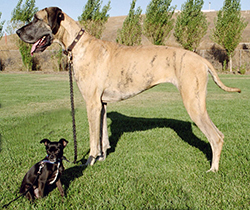
The DNA that allows dogs to be the most diverse species on the earth is unique to dogs, wolves and foxes. If you tried to breed a cow with short legs, or a bear with a curly tail- you would try and try and never achieve it. Dogs on the other hand have more genetic diversity even though they have 99.8% similar DNA - the difference between a 10 inch tall chihuahua and a 42 inch tall Great Dane is found only in 0.2%.
The reason is, dogs have long sections of DNA called 'Tandem repeats" that are extra unnecessary copies of genes and they are also very prone to mutation- allowing breeds to be developed in a relatively very short period of time. (Read more here.)

In 1965 Genetics study by Scott & Fuller showed that when you breed two pure-bred parents-the resulting generations of dogs are increasingly diverse and look very little like each other or the original breeds.
For example, this Cocker Spaniel and Basenji had puppies that looked like neither of them:

Another generation later- even more variety was present:

Often times, shelters have no clue what to label a dog because even its litter-mates and parents could share few physical characteristics. According to Wisdom Panel, which is used to test DNA- if a dog has been mixed for three generations- there is no way to genetically determine the breeds in its ancestry. This is because breed markers (often recessive) are the first to go when breeds are mixed.

Pit bulls are the most diverse group of dogs- as they are not even a breed to begin with. It is possible that well-mixed populations of dogs tend to look like "pit bull type dogs." If you let dogs breed however they wanted for 3+ generations, what features would fade away? It is likely that extreme features/overly-shortened or elongated features would fade (very long or short coats, ears, legs, muzzles, tails and weight.)

DNA tests of mutts can reveal interesting trends (read more here). Most likely because the number one place owners get their mutts is the shelter (46%), 9/10 mutts in the U.S.A. are spayed or neutered. This means that mixed genes are less likely than pure-bred genes to be passed on- preventing a real melting-pot of doggy-DNA from developing. Pure-bred dogs are less likely to be neutered. This is why mutt-DNA shows the popular breeds of the previous decades showing up in today's mutts rather than today's popular breeds. (For example, the Chow-Chow is the 63rd most popular breed by the 3rd most likely breed to show up in mutts because they were popular purebreds in the 1980s.)

However, because there is no real pit bull breed-the genetic pool is already diverse and getting more and more diverse with time. Our dog Bruno looks like a standard pit bull- but has no "Staffordshire" DNA (only dalmatian and poodle). On the other hand- our dog Winnie looks less like a standard pit bull, and has at least 25% Staffie DNA.

Because of this diverse genetic pool- it is hard to argue that all of these dogs have any commonalities at all- other than they are well-mixed and probably lack genetic diseases.This is important for potential-adopters to know, because labels can turn them off to great dogs. A research project done at Western University in Pomona showed that in 15 out of the 16 dogs, breeds were shown to be predominant that the shelters did not recognize, and that only 25% of the dogs identified as specified breed mixes were found correct by DNA. This is surprising because the dogs used in the study could have been better identified, even by appearance if the shelter staff had done a little more research or took a little more time-rather than simply labeling dogs "lab", "terrier" or "shepherd" mixes.


(Take a closer look at all of the sample dogs)

Labeling the dogs correctly could help them get adopted and lessen the stigma of the "pit bull." DNA tests are too difficult, and mixed dogs are too well-mixed to often even look like the breeds they come from. I think it may be best to simply call these shelter dogs "Mixed Breed" or "Multi-Breed" dogs, and leave it to the adopters to determine for themselves if they like what they see. Maybe labeling breeds does more harm than good.

Wednesday, March 9, 2011

First of 14 Pits Rescued from Bronx Fire Available for Foster

Yesterday, 14 pit bulls (including 1 puppy and 4 newborns) were rescued from a fire in a rented apartment in the Bronx. The dogs were injured by the fire and needed to be treated for smoke inhalation. The owner was said to be breeding them, not fighting them, but clearly this is a case of a recklessly irresponsible "back-yard" breeder- the dogs were emaciated.

They are now at Animal Care and Control, no doubt where they or their puppies could have eventually ended up after being sold and discarded like many other dogs in the city.


Reporters seemed shocked that the fire-fighters were not attacked.
The Times wrote, "Perhaps affected by the smoke, the dogs seemed limp and sleepy, and certainly not combative." (Because of course they would have been combative other-wise.)

The first of the 14 dogs is now available for foster:
To help, please donate to the rescue Amsterdog or fill out an application at Amesterdog.com
Ankana


Update: More of the Fire dogs available for rescue/foster/adoption:
Buster

Boss

Killian


Monday, December 13, 2010

Find the Pittie!

20 dog breeds are commonly confused with pit bull terriers. Can you figure out which one is the pittie in this group? I got half way through before I found him. Pittie Quiz! (take it here)
(Thanks to Dont be a Pit Bully for the link!)


When people assume all these dogs are the same breed, actions by so many dogs are grouped together making Pitties seem more dangerous than they are.

Wednesday, November 3, 2010

My visit to AC&C-Manhattan

Last night I visited Animal Care and Control - Manhattan to see it for myself, visit with the dogs and talk to some of the staff. I was really pleasantly surprised at how happy and well-cared for the dogs seemed despite their circumstances. Maybe that's just because the unhappy ones were stashed out of sight. I had made a list of dogs I wanted to visit and half were presumably in what one employee described as "the sick ward." Although I had trouble imagining that half of the dogs were ill, I chose to assume that they were all being taken care of.

When a man came in looking for "Milo" who he'd seen on the website and asked the employee is he was still there, the man replied "Yes" while shaking his head "no." It seemed like a defense he'd picked up over time to tell people the dogs they were looking for were either no longer around or waiting to be put down. It seemed like a cruel joke and he apologized, saying to the man, "Sorry, I was just trying to be cheerful. I really don't know unless you have an ID number."


(Save Whitney here.)

After some prodding questions about how long the dogs stay and where I could find the ones at risk, I was told that "well it could be anywhere from 3 days to 2 months," and "I don't know anything about that." I was confused but realized something very sad was going on here. All of the dogs had been admitted within the last few days; they had so little time to be found  and rescued. These dogs who looked so happy and full of life had to be put down regularly, and the staff who clearly knows a lot about this process, was simply not able to talk about it anymore.

Most of the dogs I saw had been picked up off the street so they didn't seem to mind their spacious warm cages, food, water and friendly visitors. One (named Bear) was even being adopted on the spot. I remarked at how cute he was and his new owner said triumphantly that Bear was coming home with him. This made me really happy as I quickly did the math in my head and realized that at least 2/3 of these great dogs would probably find homes.


Not surprisingly, all but 2 of the dogs in the whole place were pit mixes. It was like heaven for me as I walked through wishing each and every one of them could come home with me. They wiggled their bums and wagged their tails, their eyes brightened up and they licked my hands through their bars. Some jumped and romped around seeming to say "Please pick me!" I felt sad for the ones who looked too tired or scared to even try to sell themselves; they had been worn down by the constant barking or constant visitors or the brusque nature of the employees who couldn't possibly comfort them all.

One dog was being admitted while I was there. He was a tiny tiny white pit mix named Lex. When the employee tied him up to the wall while he went to ready his cage, the dog shook and quivered by the wall. I knelt down to hold him and he jumped into my arms and licked my face all over. This lucky guy was destined to find a home, I thought. He was the smallest adult pit mix I'd seen and so charming.

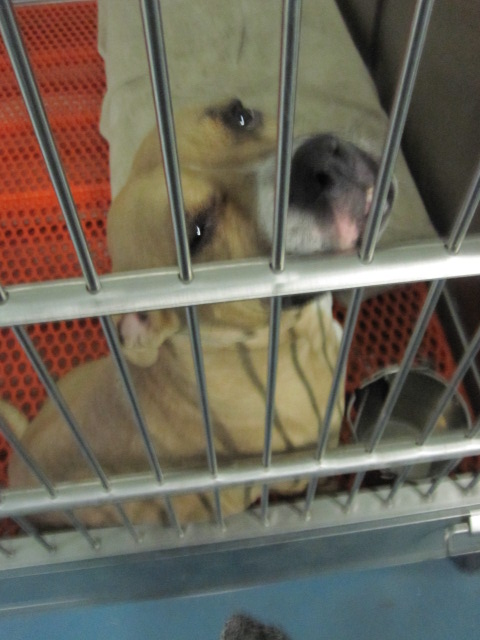
Here are a few pictures I was able to take of Lex, along with a few I got of his neighbor, Tyson. Lex and Tyson are exact opposites- and show the diversity of this great breed. Tyson was 70 pounds and probably mixed with a Great Dane, while Lex almost looked like a 30 pound white bunny rabbit. Somehow their outward appearances can change so much, but their dispositions could not be more similar. Both were wiggely waggely mushes.

(Lex is not yet on the ACC website)
(I could barely get a good picture of Tyson- he was jumping and wiggeling so much!) Save Tyson here.
These are some of the other dogs I saw, Whitney, Angelica, and Rexxi. All as sweet as could be- especially Rexxi-truly a cat in a dogs body who purred and rubbed herself against the bars seeking scratches)


Tuesday, November 2, 2010

Eat Chocolate - Save Lives!

If you want to help pit bulls and other dogs in need through donations to Animal rescue organization and get chocolate at the same time, please click here.

Rescue chocolate- (who doesn't want a chocolate flavor called "pit bull peanut butter"?) is a great way to help. Its vegan, kosher, eco-friendly and 100% of the net profits go to animal rescue.
Related Posts Plugin for WordPress, Blogger...