PETsMART offered a phone/web based training on Pit Bull Adoption Basics/Training hosted by Kim Wolf of the Animal Farm Foundation.
These are some of the interesting slides shared with the participants.... These are a great resource if you are trying to explain pit bulls to your friends and family.
Kim said...Only 2-10% of a dog's DNA determines his DNA, and yet we are using that very small amount as a predictor of behavior, which is arbirtary and incorrect.
Don't imply more than you know or use terms incorrectly. Example, for a dog to be a bait dog- there has to be an aggressor dog, which is not a good image to conjure in adopters minds about pit bulls. Also, terriers tend to be "tenacious", but "pit bulls type dogs" can be lazy.
Don't imply more than you know- just because a dog barks at all brown dogs, doesn't mean it cannot be in a home with a brown dog. Fact: It is better to transfer ownership and get the dog back through legal channels if something goes wrong, rather than loaning the dog first- which opens you up to liability as a shelter or organization.
Having a separate area or policy for pit bull dogs sets the potential adopters up to think that pit bulls are different. You as the advocate should not create unnecessary fear. We should not assume anything about a dog's behavior from its arbitrary label.
There can be an unlikely match where you least expect it! Take time to get to know the potential homes.
Animal Farm Foundation does not give people a list of what may go wrong because they feel that they cannot list a comprehensive list of "what ifs". People with children between 5-17 acquire 75% of dogs at any given time, so age-restrictions automatically restrict the adopter pool to 25%.
Advice from AFF to Shelters/Rescue Groups:
1) Place them next to a variety of dogs, don't segregate.
2) Put a friendly pit bull in your lobby as a greeter with a bandana!
3) Teach the dogs parlour tricks (pray, handshake, roll over, blow kisses)
4) Use enrichment toys to keep pits quieter and busier- they will present better to adopters
5) Think of your adopter as a customer-make the environment calm, cool and peaceful
6) Use playgroups to burn energy, learn more about the dog's personality, and engage volunteers
7) Have Rescue Brunches - invite local rescue groups and foster homes to watch play groups to pick dogs based on observation.
8) Some dogs do best with a job (agilty, disc, obedience, police, search and rescue, assistance, therapy)
9) Happiness Sells, Sadness repells. (Adoptions increase when you focus on the human/canine bond.)
10) Take pictures with other dogs or people, create a scene or tell a story, take pictures in front of landmarks or in costumes, even a hand or foot of a person in a picture increases the dog's chances of getting adopted. Take videos!
11) Use adopt me vests
12) Use business Cards
13) Don't forget the bling! (Cute tags, collars, bandanas!)
14) Don't forget the Elder dogs, they can be great additions to homes for years to come
15) Promote your staff that live with pit bulls to show you believe what you are selling
16) Promote your shelter as an "adoption option" rather than individual dogs.
Showing posts with label mixed breeds. Show all posts
Monday, September 12, 2011
Animal Farm Foundation Slideshow
Labels:
animal farm foundation,
awareness,
bait dog,
behavior,
breed bias,
dog fighting,
genetic results,
genetic testing,
marketing,
mixed breeds,
multi-dog homes,
organization,
pit bull fighting
Wednesday, August 3, 2011
American Shelter Dogs
This is Peter, an American Shelter dog sent to show you how easily a well-mixed dog can be mistaken for a pure-bred mix.
The American Shelter dog is a type of dog that is too well mixed to assign a predominant breed with any degree of certainty. Recent research has shown that shelter workers are wrong in identifying a mixed-breed dog's component breeds 87.5% of the time.
Many shelters (such as The Lewis & Clark Humane Society, The Humane Society of Charlotte, The Animal Welfare Society, Kitsap Humane Society, Multomah County Animal Services and Second Chance Pet Rescue) have recently begun to use the term because of how often they are simply guessing about a shelter dog's lineage-which can have unwanted consequences whether the label is desirable or not.
At Kitsap Humane Society, this exact situation did happen. Hershey was labeled a Chocolate Labrador Retriever (which is very likely, take a look!), but he was not a pure-bred lab. His family, expecting a lab in looks and behavior was surprised when he exhibited behavioral issues and returned him. Only then did the shelter do a DNA test on Hershey which showed that he was part Staffordshire Terrier (or Pit mix) which would require more diligent and specific training techniques than a regular lab.
While shelters may feel that they can get more pit-mixes adopted if they claim they are shepherd, terrier, or lab mixes-- they are actually contributing to a high return rate. Adopters need to know exactly what they are adopting based on the dogs' personality and train-ability- not on its looks.
So to reduce the number of returns, shelters have replaced the term "Mutt" with ASD (American Shelter Dog). The director of public relations and development at Kitsap said, "The ASD is our way of saying 'You can't judge a book by its cover.' When people come in to adopt an animal, they need to be focused on what's the best dog for their lifestyle, not what is the breed known for."
The point is not to mis-label pit mixes as ASDs, but rather to label pits as pits when they are clearly pits, and to refrain from calling a dog a pit-mix when it simply has a square-ish head, or a long-haired dog a German shepherd mix.
So far, the program appears to be working. The return rate at Kitsap has dropped from 5% of all adoptions to 3%. At Lewis and Clark Humane Society, they are even developing personality profiles to take the place of "breed" to help potential adopters find the right fit for them. They say, "So, instead of introducing you to a Pit mix, we will show you a brindle American Shelter Dog who is a bit introverted, but very playful. Or perhaps you would be interested in the medium-sized black American Shelter Dog with an agreeable and extroverted personality?"
Here are some American Shelter dogs available at participating shelters across the US for adoption:
| Ginger |
| Dixie |
| Clooney |
| Heinz |
Friday, July 29, 2011
Rescue Spotlight: Ramopo-Bergan Animal Refuge
The sound of complete silence. I was baffled and asked myself, "Where are all of the dogs?" No large pit bulls were leaping to greet me, no scared dogs were curled up in balls on dirty blankets in the corners, no dogs made any sounds at all!
As I continued walking in, I saw that the dogs were not actually missing- but laying peacefully on beds or in crates, enjoying the lazy afternoon warmth streaming through the windows. (Yes, this shelter has actual windows, not to be found in even the best city shelters.) Noticing me approach, they each calmly came to sniff my hand and wag their tails. Later on, barking only seemed to accompany the daily feeding time.
By contrast, because NYC-Animal Care and Control is filled with pit-bulls and geriatric dogs- many people do not even visit. (More adoptable dogs are quickly rescued and saved from inevitably catching kennel cough.) Due to the variety, desireability and healthy condition of the dogs at good shelters like RBARI and Animal Haven, pit bulls at these locations are viewed by more potential adopters and may have a better chance at finding a good home.
The facilities at RBARI were clean, quiet and well-staffed with dozens of volunteers-including many high-school students receiving volunteer credit. The animals at this shelter are extremely lucky and well cared for. Just look at the clean spacious corrals filled with blankets, toys, and large clean bowls of water! If only every shelter was this well-run.
I came upon this adorable little pocket-pittie named Petunia. She came from a kill-shelter when she was a tiny baby and has been waiting 2 months so far for her forever home. She is a little older than 8 weeks old and is good with other dogs and children.
I enjoyed playing with her a bit outside. She has plenty of energy and will need proper socialization, exercise and training, but is so completely adorable- how could anyone pass her up!?
Don't let her long wait worry you though- every pit bull at RBARI is given the time, resources and dedication necessary to find a proper placement.
Beautiful Nessie has been at RBARI for a year, but gets plenty of walks and stimulation. She is trained well and everyone who walks her maintains her training so that she knows to sit whenever exiting a door.
Nessie is a sweetheart with a big heart and a waggely tail. During my visit with her she loved being out-doors and smelling the flowers and approached strangers with friendliness and a wagging tail. She is not great with other dogs but focuses her attention well on humans and is extremely trainable.
Another Pittie at RBARI was able to find her first home when she was a puppy but was brought back after a conflict with the other dog of the house.
Because RBARI was unable to find her a home, they have placed her with a pit-specific rescue where she has a better chance of getting the training, exercise and potential adopters she needs.
This is what Tootsie looked like as a pup and now.
RBARI also recently found a home for this special pit-bull named Hooper.
Hooper was rescued the day before his impending-euthanization from a kill-shelter.
He was a stray with an extremely mal-formed paw. Despite this- the people-loving pit found a good home very quickly who brought him to an Orthopedic specialist who is now dedicated to getting Hooper surgery to fix his paw.
RBARI is raising funds to help Hooper- if you would like to help, you can call (201) 337-5180 or e-mail adoptlove@rbari.org.
To see all of the happy, healthy, wonderful dogs (including small breeds and puppies) check out petfinder.
RBAR's website also suggests you visit these great pit bull resources:
Bad-Rap, PBRC, and SPBR.
Labels:
adoption,
animal control,
euthanasia,
mixed breeds,
petfinder,
pit bull puppies,
rescue,
rescue spotlight,
resources,
shelter
Pittie of the Week: PUPPY WEEK
Yes, I know I always advocate rescuing older pit bulls because puppies are more adoptable, but even puppies need homes!
....and Smilin' Pit Bull Rescue is filled to the brim with them!
If you have some spare time and want to spend it scrolling through pages and pages of adorable puppies, check out this page where SPBR features all the puppy litters they have raised and found homes for since 2004. THAT IS A LOT OF PUPPY PICTURES! And while I am tempted to show you all of them...I will just stick to puppies that SRBR has adoptable right now... I will only show you an adorable selection....
....and Smilin' Pit Bull Rescue is filled to the brim with them!
If you have some spare time and want to spend it scrolling through pages and pages of adorable puppies, check out this page where SPBR features all the puppy litters they have raised and found homes for since 2004. THAT IS A LOT OF PUPPY PICTURES! And while I am tempted to show you all of them...
Puppies in packs....
Puppies with wrinkles...
Cuddling puppies...
Puppies in Boxes....
Puppies in snow...
Puppies with blue eyes...(available now)
Puppies in beauty shots...
....and Puppies in purses...
Adoptable Puppies can be found here- There are 23 available now!
Labels:
adopt,
adorable,
happy pit bull,
lazy dog,
loldogs,
mixed breeds,
pittie of the week,
play time,
puppies
Monday, May 16, 2011
Pit Bulls + Science
Amazingly, it takes many many generations of selectively breeding dogs to get a certain feature, attribute or skill, but those "chosen" genes may not be the most successful genes. A pure-bred dog's apprearance can be based on mostly recessive traits, such that they are easily "bred-out."
In other words- if you select and restrict a pool of dogs- they will eventually appear exactly the same over time. However, if you mix dogs all over the globe for generations and generations and introduce no selective breeding--they will tend to look similar and possess all dominant genes. (This is similar to the way blond hair and blue eyes in humans are said to be dying out because it is recessive.)
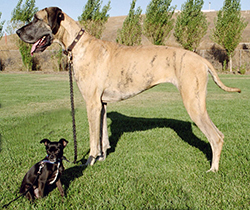
The DNA that allows dogs to be the most diverse species on the earth is unique to dogs, wolves and foxes. If you tried to breed a cow with short legs, or a bear with a curly tail- you would try and try and never achieve it. Dogs on the other hand have more genetic diversity even though they have 99.8% similar DNA - the difference between a 10 inch tall chihuahua and a 42 inch tall Great Dane is found only in 0.2%.
The reason is, dogs have long sections of DNA called 'Tandem repeats" that are extra unnecessary copies of genes and they are also very prone to mutation- allowing breeds to be developed in a relatively very short period of time. (Read more here.)
In 1965 Genetics study by Scott & Fuller showed that when you breed two pure-bred parents-the resulting generations of dogs are increasingly diverse and look very little like each other or the original breeds.
For example, this Cocker Spaniel and Basenji had puppies that looked like neither of them:
Often times, shelters have no clue what to label a dog because even its litter-mates and parents could share few physical characteristics. According to Wisdom Panel, which is used to test DNA- if a dog has been mixed for three generations- there is no way to genetically determine the breeds in its ancestry. This is because breed markers (often recessive) are the first to go when breeds are mixed.
Pit bulls are the most diverse group of dogs- as they are not even a breed to begin with. It is possible that well-mixed populations of dogs tend to look like "pit bull type dogs." If you let dogs breed however they wanted for 3+ generations, what features would fade away? It is likely that extreme features/overly-shortened or elongated features would fade (very long or short coats, ears, legs, muzzles, tails and weight.)
DNA tests of mutts can reveal interesting trends (read more here). Most likely because the number one place owners get their mutts is the shelter (46%), 9/10 mutts in the U.S.A. are spayed or neutered. This means that mixed genes are less likely than pure-bred genes to be passed on- preventing a real melting-pot of doggy-DNA from developing. Pure-bred dogs are less likely to be neutered. This is why mutt-DNA shows the popular breeds of the previous decades showing up in today's mutts rather than today's popular breeds. (For example, the Chow-Chow is the 63rd most popular breed by the 3rd most likely breed to show up in mutts because they were popular purebreds in the 1980s.)
However, because there is no real pit bull breed-the genetic pool is already diverse and getting more and more diverse with time. Our dog Bruno looks like a standard pit bull- but has no "Staffordshire" DNA (only dalmatian and poodle). On the other hand- our dog Winnie looks less like a standard pit bull, and has at least 25% Staffie DNA.
Because of this diverse genetic pool- it is hard to argue that all of these dogs have any commonalities at all- other than they are well-mixed and probably lack genetic diseases.This is important for potential-adopters to know, because labels can turn them off to great dogs. A research project done at Western University in Pomona showed that in 15 out of the 16 dogs, breeds were shown to be predominant that the shelters did not recognize, and that only 25% of the dogs identified as specified breed mixes were found correct by DNA. This is surprising because the dogs used in the study could have been better identified, even by appearance if the shelter staff had done a little more research or took a little more time-rather than simply labeling dogs "lab", "terrier" or "shepherd" mixes.
Labeling the dogs correctly could help them get adopted and lessen the stigma of the "pit bull." DNA tests are too difficult, and mixed dogs are too well-mixed to often even look like the breeds they come from. I think it may be best to simply call these shelter dogs "Mixed Breed" or "Multi-Breed" dogs, and leave it to the adopters to determine for themselves if they like what they see. Maybe labeling breeds does more harm than good.
In other words- if you select and restrict a pool of dogs- they will eventually appear exactly the same over time. However, if you mix dogs all over the globe for generations and generations and introduce no selective breeding--they will tend to look similar and possess all dominant genes. (This is similar to the way blond hair and blue eyes in humans are said to be dying out because it is recessive.)
The DNA that allows dogs to be the most diverse species on the earth is unique to dogs, wolves and foxes. If you tried to breed a cow with short legs, or a bear with a curly tail- you would try and try and never achieve it. Dogs on the other hand have more genetic diversity even though they have 99.8% similar DNA - the difference between a 10 inch tall chihuahua and a 42 inch tall Great Dane is found only in 0.2%.
The reason is, dogs have long sections of DNA called 'Tandem repeats" that are extra unnecessary copies of genes and they are also very prone to mutation- allowing breeds to be developed in a relatively very short period of time. (Read more here.)
In 1965 Genetics study by Scott & Fuller showed that when you breed two pure-bred parents-the resulting generations of dogs are increasingly diverse and look very little like each other or the original breeds.
For example, this Cocker Spaniel and Basenji had puppies that looked like neither of them:
Another generation later- even more variety was present:
Pit bulls are the most diverse group of dogs- as they are not even a breed to begin with. It is possible that well-mixed populations of dogs tend to look like "pit bull type dogs." If you let dogs breed however they wanted for 3+ generations, what features would fade away? It is likely that extreme features/overly-shortened or elongated features would fade (very long or short coats, ears, legs, muzzles, tails and weight.)
DNA tests of mutts can reveal interesting trends (read more here). Most likely because the number one place owners get their mutts is the shelter (46%), 9/10 mutts in the U.S.A. are spayed or neutered. This means that mixed genes are less likely than pure-bred genes to be passed on- preventing a real melting-pot of doggy-DNA from developing. Pure-bred dogs are less likely to be neutered. This is why mutt-DNA shows the popular breeds of the previous decades showing up in today's mutts rather than today's popular breeds. (For example, the Chow-Chow is the 63rd most popular breed by the 3rd most likely breed to show up in mutts because they were popular purebreds in the 1980s.)
However, because there is no real pit bull breed-the genetic pool is already diverse and getting more and more diverse with time. Our dog Bruno looks like a standard pit bull- but has no "Staffordshire" DNA (only dalmatian and poodle). On the other hand- our dog Winnie looks less like a standard pit bull, and has at least 25% Staffie DNA.
Because of this diverse genetic pool- it is hard to argue that all of these dogs have any commonalities at all- other than they are well-mixed and probably lack genetic diseases.This is important for potential-adopters to know, because labels can turn them off to great dogs. A research project done at Western University in Pomona showed that in 15 out of the 16 dogs, breeds were shown to be predominant that the shelters did not recognize, and that only 25% of the dogs identified as specified breed mixes were found correct by DNA. This is surprising because the dogs used in the study could have been better identified, even by appearance if the shelter staff had done a little more research or took a little more time-rather than simply labeling dogs "lab", "terrier" or "shepherd" mixes.
(Take a closer look at all of the sample dogs)
Labeling the dogs correctly could help them get adopted and lessen the stigma of the "pit bull." DNA tests are too difficult, and mixed dogs are too well-mixed to often even look like the breeds they come from. I think it may be best to simply call these shelter dogs "Mixed Breed" or "Multi-Breed" dogs, and leave it to the adopters to determine for themselves if they like what they see. Maybe labeling breeds does more harm than good.
Labels:
breed bias,
bruno,
BSL,
d,
dna test,
genetic disease,
genetic results,
genetic testing,
mixed breeds,
pit bulls,
shelter
Monday, April 25, 2011
Designer Pit Bulls
As you may know- many different types of dogs masquerade as "American Pit Bull Terriers" or "pit mixes" or "pitbull type dogs." Winnie sometimes looks more like a lab than the 1/4 Staffie terrier that she is, but I think of her as a pittie-mix. Bruno is mostly mutt (maybe some Dalmatian and boxer) but he is certainly a pit-mix (my mother says "its the shape of his head!" and apparently that's all that matters.)
Last weekend was Easter weekend: we were home with Bruno and my Mom asked- What is a pit bull after all? Can you have a pure-bred pit bull?
I answered no- there is no such thing. I decided to write a post about the different types of dogs that are considered pit-bulls and the ones that really shouldn't be.
To me- a "pit bull" is a type of mixed-breed dog that looks a certain way and has a particular affection for people, they tend to have smooth coats, have short folded- or up straight ears, be 35-55 pounds and somewhat muscular with a short snout and a square-shaped head. A lot of shelter dogs fall into this category. (As I showed in a previous post, all of these dogs are considered Pit mixes at Animal Care and Control of NYC:)
PBRC.org reminds readers: "A "Pit bull” is NOT a breed. It's a generic term often used to describe all dogs with similar traits and characteristics known to the public as "pit bulls." When we use the term “pit bull” here, it should be understood to encompass American Pit Bull Terriers, American Staffordshire Terriers, and Staffordshire Bull Terriers." Here is some more info on pit bulls at Pit Bull Rescue Central.
The Animal Farm Foundation writes, "Over time, we realized that the dogs we were helping were not necessarily pure bred American Pit Bull Terriers, but dogs that people called "pit bulls." "Pit bull" is not a breed or breed mix, but an ever expanding group that includes w...hatever an animal control officer, shelter worker, dog trainer, politician, dog owner, police officer or newspaper says it is."
However, Backyard-breeders and people who have developed the breed for its tough-look, large head, muscles and sometimes fighting ability do advertise their dogs as "American Pit Bull Terriers." I do not consider these dogs to be "pit bulls," they are often double the weight of an average pit-bull type dog and have very specific characteristics that would be better categorized in their own new breed. Backyard breeders are breeding their dogs based on what is trendy- like this new "tri-color trend."
This dog's puppies are being sold for $1000 each online as "ABPT"s:
It would take genetic analysis, but I would venture to say that a dog like this is as different from a typical "pit bull type dog" as a pit-bull is from a bulldog.
These dogs' (probably actually mixed with bulldogs) puppies are going for $2000 each:
Breeders of all types of dogs evolve the breeds they work with through generations of selective breeding, and the same thing is happening here- pit bulls selected and inbred over many generations are being bred to be bigger, tougher, and more serve-looking.
This practice has gone on for centuries to produce guard dogs and working dogs, but the problem here is that these dogs are being sold to people who do not know how to handle them- who often refuse to neuter them- and who want to breed them themselves to make money. This ends up putting more genetically aggressive dogs into the stray and unwanted dog populations and floods many city shelters. It also hurts the reputation of "pit bull type dogs"- dogs that may be smaller, better with children, and less dog-aggressive like these:
Last weekend was Easter weekend: we were home with Bruno and my Mom asked- What is a pit bull after all? Can you have a pure-bred pit bull?
I answered no- there is no such thing. I decided to write a post about the different types of dogs that are considered pit-bulls and the ones that really shouldn't be.
To me- a "pit bull" is a type of mixed-breed dog that looks a certain way and has a particular affection for people, they tend to have smooth coats, have short folded- or up straight ears, be 35-55 pounds and somewhat muscular with a short snout and a square-shaped head. A lot of shelter dogs fall into this category. (As I showed in a previous post, all of these dogs are considered Pit mixes at Animal Care and Control of NYC:)
PBRC.org reminds readers: "A "Pit bull” is NOT a breed. It's a generic term often used to describe all dogs with similar traits and characteristics known to the public as "pit bulls." When we use the term “pit bull” here, it should be understood to encompass American Pit Bull Terriers, American Staffordshire Terriers, and Staffordshire Bull Terriers." Here is some more info on pit bulls at Pit Bull Rescue Central.
The Animal Farm Foundation writes, "Over time, we realized that the dogs we were helping were not necessarily pure bred American Pit Bull Terriers, but dogs that people called "pit bulls." "Pit bull" is not a breed or breed mix, but an ever expanding group that includes w...hatever an animal control officer, shelter worker, dog trainer, politician, dog owner, police officer or newspaper says it is."
However, Backyard-breeders and people who have developed the breed for its tough-look, large head, muscles and sometimes fighting ability do advertise their dogs as "American Pit Bull Terriers." I do not consider these dogs to be "pit bulls," they are often double the weight of an average pit-bull type dog and have very specific characteristics that would be better categorized in their own new breed. Backyard breeders are breeding their dogs based on what is trendy- like this new "tri-color trend."
This dog's puppies are being sold for $1000 each online as "ABPT"s:
It would take genetic analysis, but I would venture to say that a dog like this is as different from a typical "pit bull type dog" as a pit-bull is from a bulldog.
These dogs' (probably actually mixed with bulldogs) puppies are going for $2000 each:
This one is advertised as being "XXL" and "Extra Wide" with "thick bones, wide chests" and somehow "pure bred, top of the line, blue ribbon"
This 92 lb monster with his "26.75 inch head" is somehow considered a pit bull terrier even though he is 2-3 times heavier than the standard pit-mix.
These dogs are bred to look as beefy as possible-- like this when they are only 2 weeks old (this one goes for $3000 by the way.)
It only takes a brief online search of "pit bull puppies for sale" to find horrifying pictures like this-poor dogs treated like masculine extensions for their owners' self-esteem.Breeders of all types of dogs evolve the breeds they work with through generations of selective breeding, and the same thing is happening here- pit bulls selected and inbred over many generations are being bred to be bigger, tougher, and more serve-looking.
This practice has gone on for centuries to produce guard dogs and working dogs, but the problem here is that these dogs are being sold to people who do not know how to handle them- who often refuse to neuter them- and who want to breed them themselves to make money. This ends up putting more genetically aggressive dogs into the stray and unwanted dog populations and floods many city shelters. It also hurts the reputation of "pit bull type dogs"- dogs that may be smaller, better with children, and less dog-aggressive like these:
How exactly are these dogs considered the same breed? I think it might be time to gather the "real" APBT "breeders" out there who seem to be merging their dogs with bulldogs and selecting for large/short characteristics and form a new breed, a breed that can be standardized like all the others. That way, these pittie mixes and be recognized as different and unique from this other "designer" breed of dogs.
What do you think? What do you consider your pitties to be?
Labels:
Amstaff,
APBT,
back-yard breeder,
inbreeding,
mixed breeds,
overpopulation,
pit bull fighting,
spay and neuter
Subscribe to:
Posts (Atom)